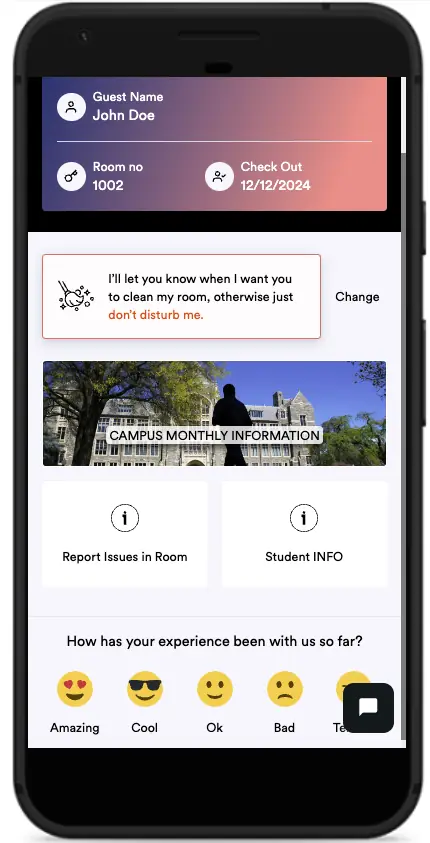
Every damage argument at check-out is decided by what was recorded at check-in. If the condition of the room was never captured properly, the residence has no evidence, the student has no reassurance, and the conversation in June becomes a negotiation instead of a fact.
Most residences either skip the check-in record entirely or bury it in a paper form nobody can find nine months later. A good checklist takes about 10 minutes per room and pays for itself hundreds of times over across a building.
1Before the student arrives (staff walk-through)
- Walls and paintwork photographed, including any existing marks
- Furniture present and intact per inventory: bed, desk, chair, wardrobe, curtains
- Appliances tested: fridge, kettle, lamps, AC or heating
- Kitchen and bathroom fittings checked: sink drains, shower, toilet, hob
- Keys and fobs counted and recorded
- Meter readings noted
- Mattress condition photographed
- Window and lock operation checked
2With the student (self check-in)
- Student confirms room condition in their own checklist
- Student photographs anything already damaged
- Both parties' records are kept separate and linked to the same room and date
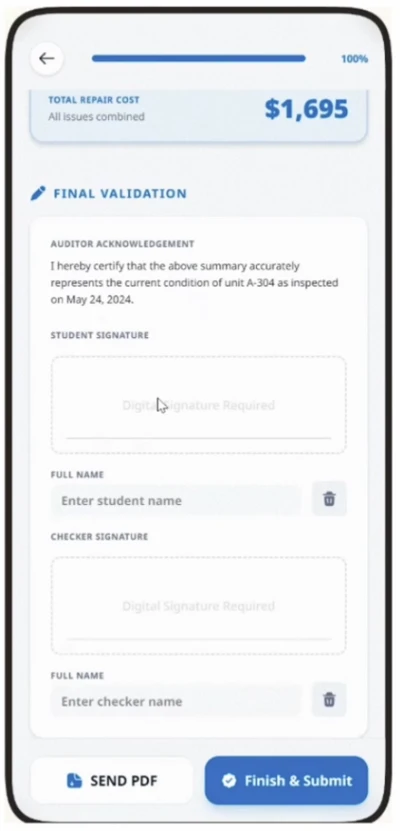
- Student signs their record
- Staff countersign
3Paperwork
- Signed record stored against the room and against the student
- Photos timestamped so the date cannot be argued later
- Copy sent to the student automatically
Pro tip
Keep the staff checklist and the student checklist separate. When the two records are independent, nobody can claim the form was filled in for them. This one detail kills most deposit disputes.